

Surgery
SURGICAL

All kinds of surgical and operative interventions within the scope of our hospital are performed by our specialist doctors. Before the operation, the patient's general controls and laboratory tests are performed and if it is suitable for anesthesia, we prepare it for the operation. We minimize the risk of anesthesia in the operation with the respiratory and closed circuit anesthesia device and the most reliable gas anesthetic agent of today, sevorane. During the operation, the patient's ECG, blood pressure, oxygen saturation, and respiration are monitored with a bedside monitor. Patients also spend the post-operative period in the intensive care unit.

 Orthopedics and Traumatology
Like humans, our lovely friends may encounter many orthopedic problems throughout their lives. Racial diseases, hip dysplasia, elbow dysplasia, shoulder dysplasia, curvature of the bones during growth, bone fractures as a result of trauma, kneecap dislocations, knee cruciate ligament ruptures are among the disorders we frequently encounter. It is very important to make the right diagnosis in orthopedic disorders and to make the right intervention with a specialist team. As an approach to orthopedic patients in our hospital; Professional physicians make the most appropriate surgical intervention.

Eye Health and Diseases
Routine eye examination is performed in many different animal species brought for control purposes or with complaints of illness.
Ultrasonography is one of the diagnostic tests of our ophthalmology clinic for structures of the eye that are not visible in external view. It is routinely used in the diagnosis of many diseases such as retinal detachment, intraocular tumors, middle layer and lens diseases, abscesses and tumors of the posterior region of the eye.
Routine operations are performed by our experienced team in eye diseases such as corneal necrosis, eye and periocular tumors, entropion (rotation of the eyelid), cherry eye that require surgical intervention.
Neurology, Physiotherapy and Rehabilitation
Pets can suffer from brain, spinal cord, muscle and nerve diseases.
The most common symptoms of neurological diseases are::
- Limp.
- Balance disorders (Vertigo, vestibular dysfunction).
- Visual disturbances.
- Muscle atrophy.
- Extremity weakness, paralysis or lack of movement.
- Cognitive decline, behavioral changes, including dementia.
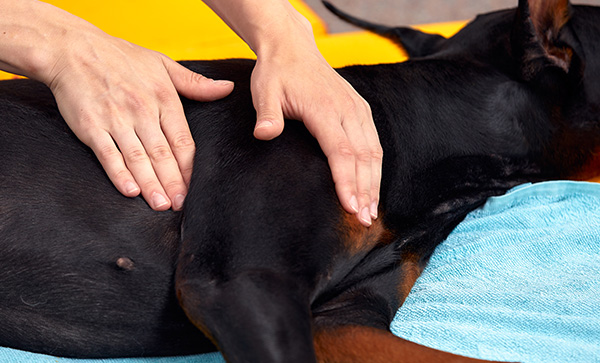
Just like arthritis (calcification) disease, herniated disc disease etc. Physical therapy helps animals affected by many diseases. At VFM Animal Hospital, it provides support to animals with various musculoskeletal and neurological disorders with its physical therapy trained veterinarians and technological devices.
Each patient undergoes a comprehensive examination, and then the physical therapy program prepared specifically for the patient is determined, and the owner is informed.
Physical therapy in animals is often fun, but also almost painless.